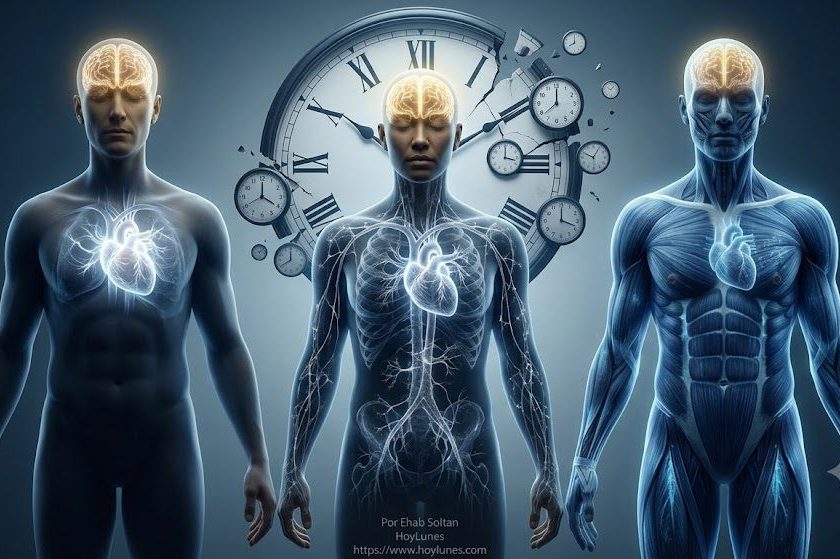
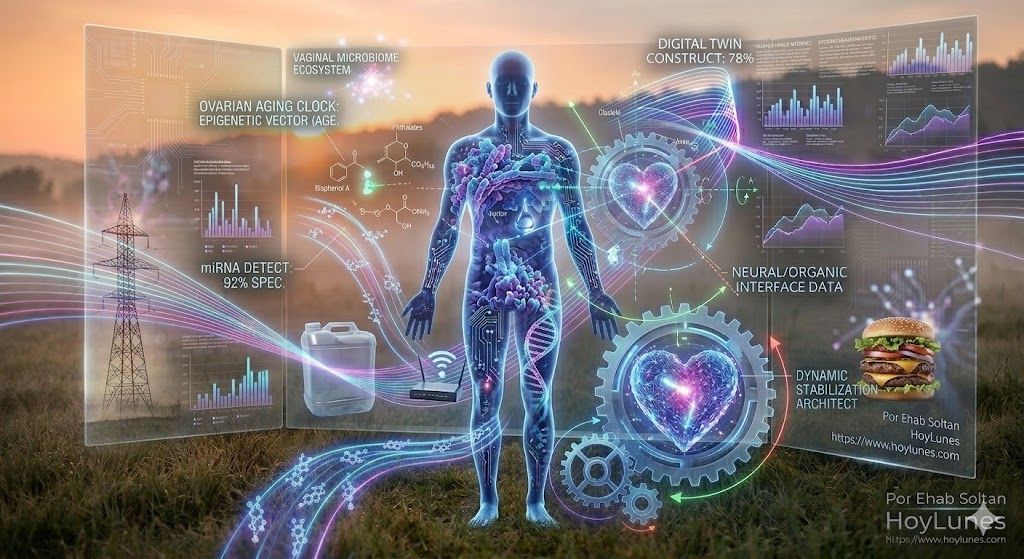
Why obesity can no longer be understood as a problem of individual willpower, but as the result of a complex biological and environmental architecture.
By Ehab Soltan
HoyLunes — For decades, medicine and popular culture explained obesity through a linear and seductively simple model: “caloric intake > energy expenditure”. Under this thermodynamic premise, the body was viewed as a furnace; if excess fuel accumulated, the blame fell exclusively on the hand that fed the fire. However, the global explosion of cases—threatening to exceed 4 billion people in the coming decades—has proven that this approach is not only incomplete but profoundly flawed.
For 99% of human evolutionary history, the predominant metabolic challenge was not an excess of energy, but its scarcity. Our hormonal systems, from insulin to leptin, evolved to protect every available calorie and store it with extraordinary efficiency. This biological design, which guaranteed survival for millennia, now faces a radically different environment: permanent energy abundance, ultra-processed foods, and constant dietary stimuli. The result is an evolutionary mismatch between our ancestral biology and the modern nutritional ecosystem.
Cutting-edge science is dismantling this moralizing simplification. Obesity is no longer defined simply by excess weight, but as a complex metabolic disease, a neuroendocrine disorder and, above all, an ecological phenomenon of the human organism attempting to adapt to an environment for which it was not designed.

Adipose Tissue: From Fat Storage to Endocrine Organ
A fundamental paradigm shift has been the understanding that body fat is not an inert storage tissue. It is, in fact, a vital and dynamic metabolic organ. Adipose tissue secretes potent hormones called adipokines, which regulate everything from systemic inflammation to insulin sensitivity.
When visceral adipose tissue expands beyond its healthy capacity, it ceases to be an energy protector and becomes a source of chronic low-grade inflammation. This altered signaling triggers cardiometabolic pathologies, transforming the individual’s physiology long before the first clinical symptoms appear.
In this equation, there is an often-ignored actor: skeletal muscle. This tissue does not only allow movement; it is the body’s largest consumer of glucose and one of the primary regulators of insulin sensitivity. The progressive loss of muscle mass reduces the body’s capacity to manage circulating energy. For this reason, modern obesity is being described not only as an excess of fat but also as a functional deficit of metabolically active muscle.
The Metabolic Brain: Obesity as Neural Dysfunction
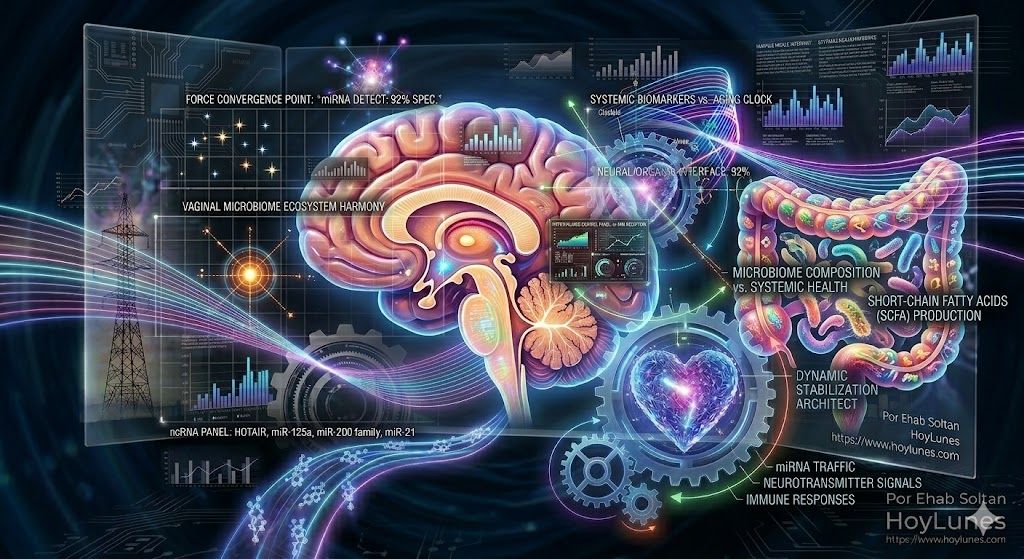
If adipose tissue is the periphery, the hypothalamus is the command center. Obesity is, essentially, a neurobiological disease. The brain integrates signals from leptin (satiety), ghrelin (hunger), and insulin.
Research published in Science has identified biomarkers in cerebral white matter that suggest weight-related structural changes. In many cases, the brain develops leptin resistance: although fat stores are sending satiety signals, the hypothalamus does not perceive them. The individual lives in a state of constant biological hunger, not due to a lack of willpower, but because of an error in the processing of neural data.
The Gut Microbiome: The Invisible Regulator
One of the most disruptive discoveries is the role of the trillions of microorganisms that inhabit our intestines. The microbiome does not only assist in digestion; it regulates energy storage. It has been shown that certain bacterial communities are extremely efficient at extracting calories from food, explaining why two people can consume the same diet and absorb radically different amounts of energy.
This ecosystem interacts with the immune system and produces metabolites that affect insulin sensitivity. This provides the foundation for therapeutic microbiota, where personalized nutrition and precision probiotics become more powerful clinical tools than traditional caloric restrictions.
The Siege of Obesogens and Epigenetics
We cannot ignore the exposome. We live surrounded by chemical substances—present in plastics, pesticides, and cosmetics—known as obesogens. These act as endocrine disruptors that “program” cells to store fat abnormally.
This is where epigenetics comes in: the environment modifies the expression of our genes without altering the DNA code. Chronic stress, sleep deprivation, and exposure to pollutants can “turn on” fat-accumulation genes that could even be passed down to future generations. Obesity is, in part, a biological memory of a hostile industrial environment.

Genetics: The Map of Vulnerability
Although the environment is the trigger, our genetic predisposition defines the margin of response. Obesity is highly polygenic; hundreds of genetic variants have been identified that influence Body Mass Index (BMI). New Polygenic Risk Score models allow for the prediction of obesity risk from childhood—not to sentence the patient, but to design personalized preventive strategies before the biological system collapses.
Toward a New Metabolic Medicine
Obesity is the mirror of our civilization: an ancestral biology trapped in a world of ultra-processed abundance and chemical disruption. Understanding it as a complex biological system allows us to move from stigma to solution. 21st-century metabolic health will not be achieved by counting calories, but by repairing neural circuits, restoring microbial balance, and cleaning up the chemical environment that surrounds us.
This paradigm shift is also transforming clinical practice. New therapies based on the hormonal regulation of appetite—such as GLP-1 receptor agonists—demonstrate that intervening in neuroendocrine hunger circuits can produce sustained metabolic improvements. These treatments are effective because they correct faulty biological signals in the brain and metabolism, restoring the body’s capacity for self-regulation.
Key Scientific Sources:
Nature Reviews Microbiology: The gut microbiota and obesity.
Nature Reviews Endocrinology: Obesogens: an environmental link to obesity.
Science: Hypothalamic regulation of energy homeostasis.
World Health Organization (WHO): Global report on metabolic diseases.
#BiologicalArchitectureOfObesity #SystemicObesity #MetabolicMedicine #Microbiome #Epigenetics #HoyLunes #EhabSoltan
This is for informational purposes only. For medical advice or diagnosis, consult a professional.